
Trade Show Drayage Costs Explained: Las Vegas and LA
Drayage is the most misunderstood line item on a trade show freight invoice, and it is where exhibitors quietly overpay the most. Here is how it works and how to keep it under control at Las Vegas and Los Angeles shows.
What Is Drayage?
Drayage is the short-haul move of your freight from the receiving dock to your booth, and back after the show. It is charged by the show's official material handling contractor, not by your carrier.
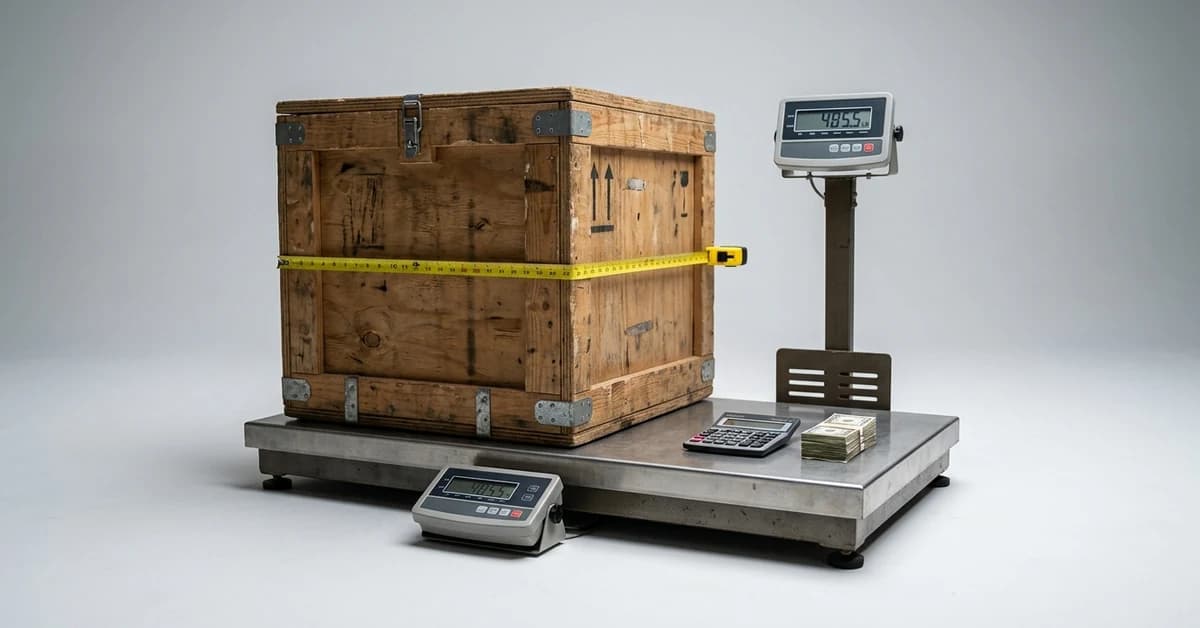
The key fact most exhibitors miss: drayage is billed by CWT (hundredweight), with a minimum charge per shipment. One CWT equals 100 pounds. Your freight is weighed at the dock, and the charge is based on actual weight or dimensional weight, whichever is higher.
How CWT Pricing Works
The formula is simple in principle:
Drayage cost = CWT rate × (total weight ÷ 100)
But three things inflate the number:
- Dimensional weight. Bulky, light freight gets charged on volume, not physical weight. A lightweight booth built from foam panels can cost as much to drayage as a heavy steel frame.
- The minimum charge. Small shipments under the minimum CWT still pay the full minimum. Combining shipments is how you avoid paying minimums twice.
- Round-trip billing. Drayage is usually charged both ways, in and out.
[查證] CWT drayage rates vary by show and by contractor (Freeman, GES, etc.), and change every year. Specific per-CWT numbers are published in each show's exhibitor service manual. Do not budget from a generic number online; pull the current rate from the show's official kit.
Las Vegas vs. Los Angeles
Las Vegas (LVCC). The Las Vegas Convention Center runs the highest freight volume in the country during shows like CES and NAB. Drayage minimums and CWT rates at LVCC shows tend to sit at the higher end because demand is constant and dock windows are tight. The advance warehouse is almost always the cheaper path here.
Los Angeles (LACC). Los Angeles Convention Center shows are generally less freight-dense than Vegas, but LA has its own friction: local labor and truck-access windows can add cost and time. Confirm your carrier can hit the exact dock appointment, because a missed window in LA turns into a waiting charge.
[推測] Directionally, expect LVCC drayage to price at or above LA for comparable freight weight, driven by volume and demand. This is a directional observation, not a quoted rate.
Five Ways to Control Drayage Cost
- Ship to the advance warehouse when available. Lower drayage rate and a wider arrival window.
- Consolidate shipments. One shipment beats three minimum charges.
- Watch dimensional weight. Crates and packing add volume. Pack tight.
- Know your exact weights before quoting. Estimated weights cause surprise bills.
- Separate small, high-value items. Sometimes hand-carrying beats paying a minimum charge on a tiny box.
Frequently Asked Questions
What is drayage at a trade show? Drayage is the short-haul move of your freight from the receiving dock to your booth and back, billed by the show's official contractor by hundredweight (CWT).
How is drayage calculated? Drayage is billed as a CWT rate times your freight weight divided by 100, subject to a per-shipment minimum, using actual or dimensional weight, whichever is higher.
Why is drayage so expensive in Las Vegas? Las Vegas shows like CES and NAB run extreme freight volume through LVCC, so drayage minimums and CWT rates sit at the higher end. The advance warehouse is usually the cheaper path.
About the Author
Calway Logistics manages trade show freight and drayage coast to coast for exhibitors at Las Vegas, Los Angeles, and Chicago venues.