
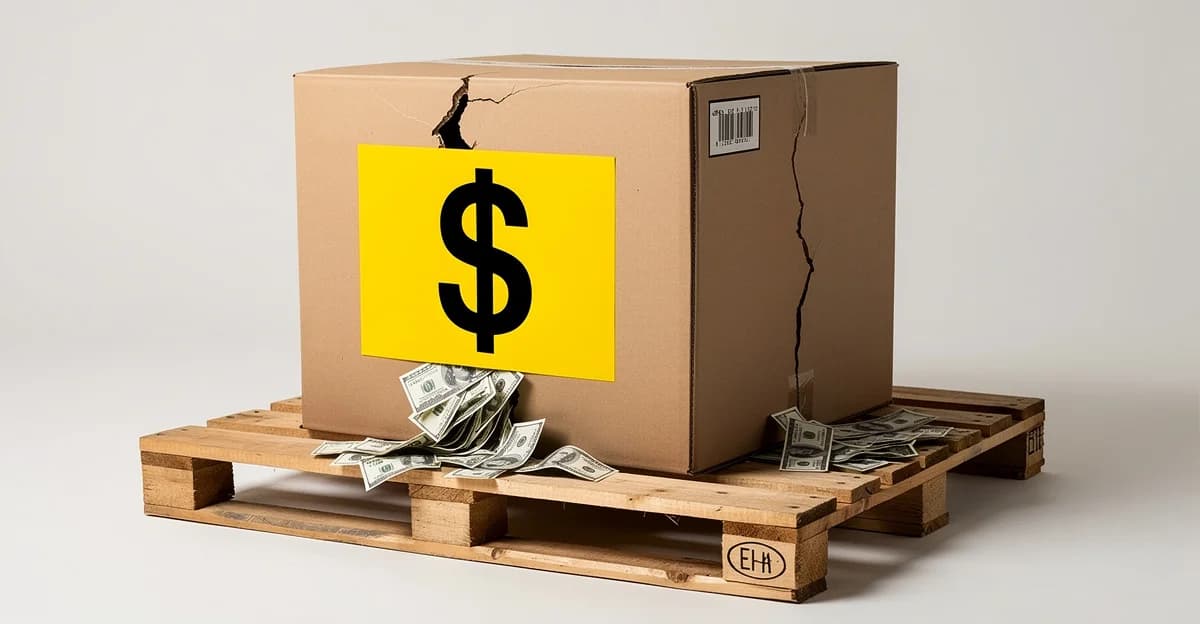
10 Trade Show Freight Mistakes That Cost You Money
Trade show freight is one of the easiest places to bleed money without realizing it. I have seen exhibitors drop $5,000 on a shipment that should have cost $1,500 — not because they needed premium service, but because they made one of these mistakes.
I have been on the floor at LVCC, McCormick Place, Javits Center, and Anaheim Convention Center for 15+ years. Here are the 10 most expensive mistakes I see exhibitors make with shipping — and exactly how to avoid each one.
1. Missing the Advance Warehouse Deadline
This is the number one money waster. Every major show has a target date for advance warehouse delivery — usually 10 to 14 days before move-in.
If you miss it, you pay direct-to-show rates. Those rates are typically two to three times higher than advance warehouse.
The fix: Mark the advance deadline on your calendar the day you book the show. Ship two to three days before that deadline to account for transit delays.
2. Letting the Official Contractor Handle Everything
The general service contractor (GES, Freeman, Shepard) will ship your materials if you ask. But they charge retail rates. Their drayage fees alone can run $300 to $800 per crate.
A specialized trade show freight carrier like Calway negotiates rates with the same contractors in volume — and passes the savings to you.
The fix: Always compare quotes. A specialized carrier is almost always cheaper for anything beyond a single small box.
3. Using Standard LTL for Time-Sensitive Freight
Standard LTL carriers treat exhibit materials like any other pallet. Your shipment might sit at a terminal for days waiting for consolidation.
Trade show freight carriers run on show deadlines. We know your SEMA booth has to be in Las Vegas by Thursday at 2 PM — not "sometime next week."
The fix: For any show with a hard move-in deadline, use a trade show specialist.
4. Incorrect Labeling
This is a small issue that causes big problems. Every show has specific labeling requirements: show name, booth number, contractor name, and warehouse address. Miss one field and your crate ends up in the wrong facility.
I have seen crates sit in a terminal for two days because the label said "Las Vegas" instead of "LVCC Advanced Warehouse."
The fix: Download the official show kit labeling template. Fill every field. Double-check the advance warehouse address — it is often different from the venue address.
5. Not Verifying Material Handling Agreement Rates
Every show publishes MHA rates — the fees the official contractor charges to move materials from the dock to your booth. These rates vary by show.
At a large show like CES, MHA can be $150 to $400 per hundredweight. At a mid-size show, it might be $80 to $120. If you do not know the rate before you ship, you cannot budget accurately.
The fix: Request the MHA rate sheet when you book your booth. Factor it into your total freight budget.
6. Shipping Everything as a Single Unit
Many exhibitors consolidate everything into one giant crate to "save money." The problem: if that crate weighs over 500 pounds or exceeds certain dimensions, you trigger heavy-lift surcharges that can add $500 to $1,500.
The fix: Split heavy shipments into multiple smaller crates under 400 pounds each. You avoid the heavy-lift penalty while keeping per-crate drayage fees manageable.
7. Waiting Too Long to Book
Last-minute freight bookings cost more — sometimes 30 to 50 percent more — because carriers scramble to find capacity. Trade show season runs February through May and September through November.
The fix: Book your freight pickup at least three weeks before the show. Four to five weeks out gives you the best rates.
8. Not Planning Return Freight
Exhibitors often spend 90 percent of their energy on getting materials to the show and 10 percent on getting them back. Then they scramble at tear-down, pay expedited rates, or abandon materials entirely.
The fix: When you book inbound freight, schedule the return pickup at the same time. Most carriers offer a small discount for booking round-trip.
9. Ignoring the Venue's Unique Rules
Every convention center has different freight rules. Las Vegas Convention Center has different dock hours than McCormick Place. Javits has different teamster requirements than Anaheim.
Standard freight carriers do not know these rules. Trade show specialists do — because we operate at these venues every week.
The fix: Ask your freight partner if they have shipped to your specific venue before. If they hesitate, find someone who has.
10. Choosing a Freight Partner Based on Price Alone
The cheapest quote is not always the most cost-effective. A carrier that costs 15 percent less but misses your deadline costs you ten times that in lost show time and rush re-shipping.
The fix: Look for three things: trade show specialization, venue-specific experience, and a track record of on-time delivery. Price is secondary.
Ready to Ship Smarter?
Get a custom quote for your next show. If we cannot beat the general contractor's rate, we will tell you honestly.
About the author: Calvin Yee is the founder of Calway Logistics, a trade show freight specialist based in Ontario, CA. He has coordinated freight for exhibitors at CES, SEMA, NAB Show, MODEX, and 50+ other shows across the U.S. and Canada. He knows what it takes to get your booth there on time, every time.