
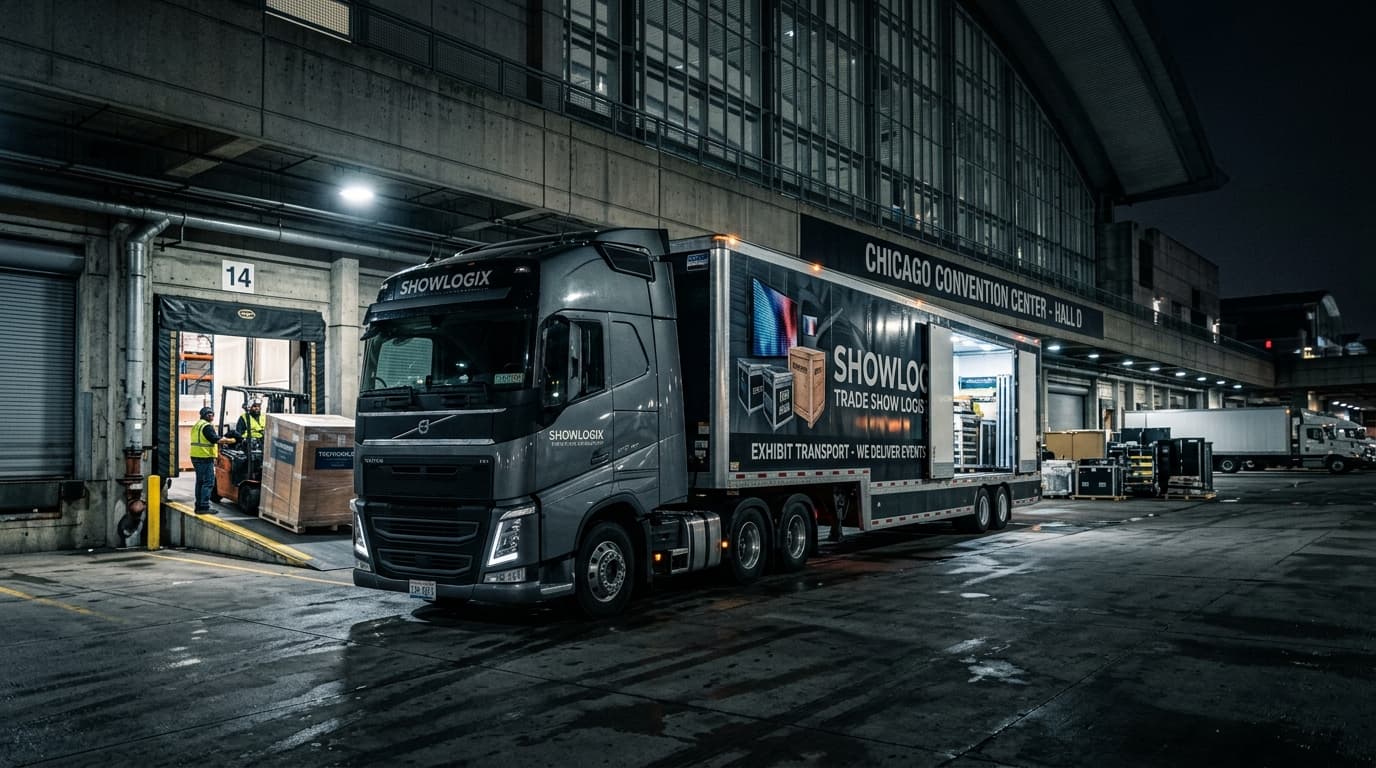
Trade shows represent a major investment for any exhibiting company. Your booth materials, displays, and product samples need to arrive on time, in perfect condition, and ready to set up -- often in a venue you have never visited before. That is where trade show freight comes in, and understanding how it works before your first shipment can save you thousands of dollars and a lot of stress.
What Is Trade Show Freight?
Trade show freight refers to the specialized shipping of exhibit materials -- booth structures, display cases, signage, AV equipment, product samples, and more -- to and from convention centers or expo venues. Unlike standard commercial freight, trade show shipments must coordinate with venue schedules, union labor rules, material handling contractors (known as drayage companies), and strict move-in and move-out windows.
The stakes are high. A shipment that arrives late, without the correct labels, or outside the designated window can result in your freight sitting in a warehouse or, worse, not making it to your booth space at all.
Advance Warehouse vs. Direct-to-Show Delivery
Every major trade show offers two primary delivery options, and choosing the right one is one of the most important decisions you will make.
Advance Warehouse Delivery means your freight is shipped ahead of the show to a designated warehouse, usually operated by the official show decorator. The warehouse holds your materials and delivers them to your booth space before the event opens. Benefits include a wider delivery window (typically two to three weeks before the show), confirmation that your freight has arrived before you fly out, and reduced risk of last-minute delays.
Direct-to-Show Delivery means your carrier brings the freight straight to the convention center during the official move-in period. This option can save on warehousing fees, but it requires precise timing. Your driver must arrive within the specific move-in window -- often a narrow window measured in hours -- or your freight may be turned away.
For most exhibitors, especially first-timers, advance warehouse delivery offers more peace of mind.
Key Deadlines and What Happens If You Miss Them
Trade shows operate on hard deadlines, and missing them has real consequences.
- Advance warehouse cutoff: Freight arriving after the cutoff date is typically accepted but incurs late fees, and there is no guarantee it will reach your booth before setup begins.
- Move-in window: Direct shipments arriving outside the official move-in period may be refused at the dock or held until the next available slot.
- Move-out window: Freight not picked up by the end of the official move-out period is typically shipped back to you via the show's default carrier at your expense -- often at premium rates.
Request the official show services manual from the event organizer as early as possible. It contains all deadlines, target labels, and drayage rates.
Tips for Labeling and Crating
Proper labeling is not optional -- it is how your freight finds its booth space in a venue with thousands of exhibitors.
- Use the official target label provided in the show services manual. This label includes your company name, booth number, show name, and the venue address or warehouse address.
- Apply labels on all sides of every piece. Materials handling workers move fast, and a label on only one side can get missed.
- Use hardside cases or custom crates for fragile displays, monitors, and anything that cannot absorb impact. Soft-side cases are convenient but offer limited protection in the rough-and-tumble drayage environment.
- Number your pieces. Label each case as "1 of 4," "2 of 4," and so on. If a piece goes missing, you will know immediately.
- Remove old labels. Outdated shipping labels from previous shows create confusion and can send freight to the wrong destination.
Why Working with a Specialized Trade Show Freight Carrier Matters
General freight carriers move freight from point A to point B. Specialized trade show carriers understand the entire ecosystem: advance warehouse timelines, official show contractors, drayage processes, and the exact documentation each venue requires.
A specialized carrier will remind you of upcoming deadlines, advise on the right delivery method for your specific show, and coordinate directly with the venue or warehouse on your behalf. When something goes sideways -- and occasionally it does -- a carrier with trade show experience knows how to resolve it quickly, because your exhibit needs to be up before the show floor opens.
Ready to Ship Your Next Exhibit?
Calway Logistics specializes in trade show freight for exhibitors across the US and Canada. Whether you are shipping a 10x10 pop-up display or a 40-foot custom booth, we handle the details so you can focus on the show. Contact us for a quote and let us take the freight stress out of your next event.
About the author: Jose Melchor is Operations Manager at Calway Logistics, based in Ontario, CA. With 15+ years in trade show logistics, he has coordinated freight for exhibitors at LVCC, McCormick Place, Javits Center, Anaheim Convention Center, and every major trade show venue across the U.S. and Canada.