
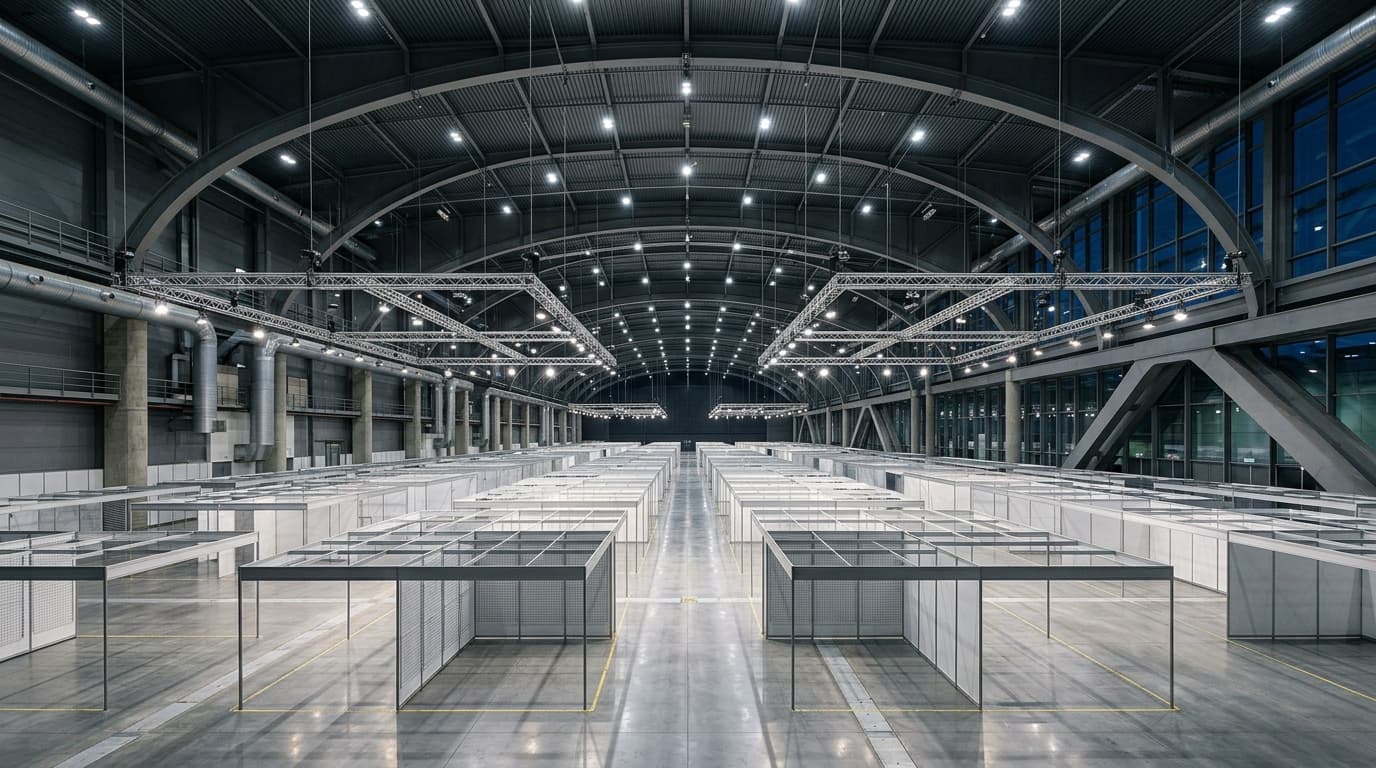
If you've ever looked at a trade show invoice and wondered why moving your freight 200 feet from a loading dock to your booth costs more than shipping it across the country, you've encountered drayage.
Drayage is one of the most expensive line items in trade show logistics, and one of the least understood. First-time exhibitors regularly budget for transportation and forget drayage entirely. That mistake can cost thousands.
What Is Drayage?
Drayage is the fee charged to move your freight from the venue loading dock (or advance warehouse) to your booth space on the show floor.
That's it. It's the last 200 feet of your shipment's journey -- the distance from the truck to your booth.
The fee is mandatory at virtually every major trade show in the United States. You cannot bypass it, bring your own forklift, or carry materials in yourself at most venues. The official general service contractor (GSC) -- typically GES or Freeman -- has exclusive control of material handling inside the venue, and they charge for every pound that crosses the loading dock threshold.
⚠️ You Cannot Bypass Drayage
At virtually every major U.S. trade show, the venue's official GSC has exclusive rights to all material handling. You cannot bring your own forklift, hire outside labor, or hand-carry freight past the loading dock threshold. The fee is mandatory.
Why Is It So Expensive?
Several factors drive drayage costs:
Union labor. Most major convention centers are in cities with unionized workforces. Labor rates are negotiated by contract and passed directly to exhibitors. In cities like Chicago (McCormick Place) and New York (Javits Center), union jurisdiction is strict -- only union workers can operate forklifts, move crates, and handle freight on the show floor.
Exclusive contractor rights. GES and Freeman hold exclusive contracts with venues. There is no competition on show floor material handling. The rate is the rate.
Volume and complexity. At a show like CES or SEMA with thousands of exhibitors moving in simultaneously, the logistics operation is enormous. The GSC is managing hundreds of forklifts, thousands of shipments, and tight scheduling across multiple halls.
Insurance and liability. The GSC is responsible for your freight from dock to booth. That coverage is built into the drayage rate.
How Is Drayage Calculated?
Drayage is charged per CWT -- per hundredweight, or per 100 lbs.
Formula: (Total weight / 100) x CWT rate = Drayage fee
Example:
- Shipment: 1,500 lbs
- CWT rate: $130 (typical mid-range show)
- Drayage: (1,500 / 100) x $130 = $1,950
📊 Minimum Charge Applies
Most GSCs set a minimum drayage charge of 200 lbs regardless of actual shipment size. A single small crate that weighs 80 lbs will still be billed at the 200 lb minimum.
Current CWT rates at major U.S. venues range from $85 to $200+ depending on:
- The show and its GSC contract
- Delivery method (advance warehouse vs. direct-to-show)
- Timing (on-time vs. late freight)
- Special handling requirements (oversized, fragile, uncrated)
Advance Warehouse vs. Direct-to-Show: Drayage Rate Difference
How you deliver your freight affects your drayage rate.
| Delivery Method | Drayage Rate | Notes | |----------------|-------------|-------| | Advance Warehouse | Lower (10-20% less) | Freight staged before show; smoother move-in | | Direct to Show Floor | Higher | Driver waits in marshaling yard; peak congestion | | Late to Advance WH | Penalty rate | Freight arrived after cutoff; direct-to-show pricing | | Uncrated / Padwrapped | Higher rate | Special handling surcharge applies |
💡 The Golden Rule
If you have time to hit the advance warehouse deadline, always use it. The cost difference on a 3,000 lb exhibit can be $600 to $1,200 -- for the same freight, just delivered earlier.
Special Handling Surcharges
Standard drayage covers freight that arrives properly crated, palletized, or in road cases. These situations trigger surcharges:
- Uncrated / padwrapped materials -- items wrapped in moving blankets rather than cased or crated
- Oversized pieces -- single items exceeding standard forklift limits
- Carpet and padding -- some shows charge separately for carpet handling
- Multiple small pieces -- a large number of loose pieces may be billed as "special handling"
If your exhibit uses custom fabrication with non-standard crating, confirm with your logistics provider whether special handling will apply.
Drayage at Major U.S. Venues
Different venues, different GSCs, different rates. Here's what to expect:
Las Vegas Convention Center (LVCC) GSC: GES (most shows). Rates: $95-$185/CWT. One of the highest-volume venues in the country. Advance warehouse strongly recommended for large shows like CES and SEMA.
McCormick Place, Chicago GSC: Freeman. Union labor rules are among the strictest in the country. Rates: $110-$200/CWT. Plan for union jurisdiction on all material handling -- no exceptions.
Javits Center, New York GSC: Javits has its own in-house labor under IATSE. Rates: $120-$200+/CWT. New York union rules apply. Budget accordingly.
Orange County Convention Center, Orlando GSC: Varies by show (GES and Freeman both operate here). Rates: $90-$160/CWT. Generally more cost-effective than major coastal venues.
Anaheim Convention Center GSC: Varies. Rates: $85-$150/CWT. California-based, good choice for West Coast exhibitors shipping from the region.
How to Reduce Your Drayage Bill
You cannot eliminate drayage, but you can reduce it.
1. Hit the advance warehouse deadline. The lower rate adds up fast on a large exhibit.
2. Minimize crate count. Drayage is charged on weight, but multiple small shipments create handling complexity. Consolidate where possible.
3. Crate properly. Uncrated materials attract special handling surcharges. Invest in road cases and proper crating -- it pays for itself in avoided surcharges.
4. Weigh your freight before it ships. GSCs can weigh your shipment at the dock and charge accordingly. Weigh accurately at origin.
5. Book advance warehouse early. For shows with high exhibitor volume, advance warehouse intake can fill up. Late arrivals may be rejected and redirected to direct-to-show (at the higher rate).
6. Work with a logistics partner who tracks deadlines. Missing a deadline by one day can cost more than the entire transportation bill.
💡 Real Budget Numbers
For a 20x30 island booth at a major Las Vegas show, budget $3,500 to $8,000 in drayage on top of transportation. For a 10x10 inline, plan for $400 to $1,200. Build these into your exhibit budget from day one.
About the author: Jose Melchor is Operations Manager at Calway Logistics, based in Ontario, CA. With 15+ years in trade show logistics, he has coordinated freight for exhibitors at LVCC, McCormick Place, Javits Center, Anaheim Convention Center, and every major trade show venue across the U.S. and Canada.